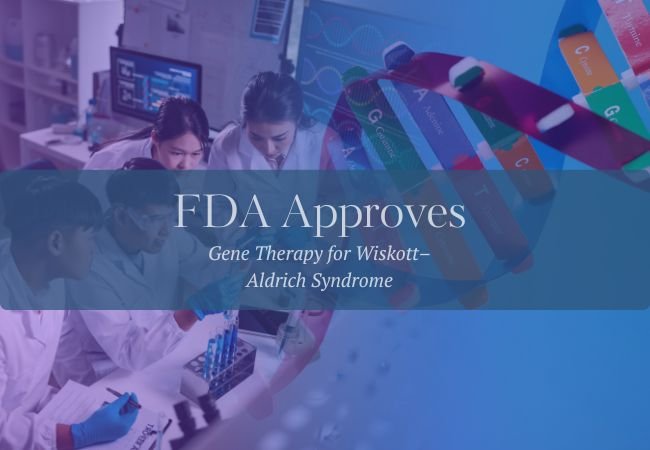
On December 9, 2025, the U.S. Food and Drug Administration (FDA) approved Waskyra (etuvetidigene autotemcel) as the first-ever cell-based gene therapy to treat and manage Wiskott–Aldrich syndrome (WAS). This approval represents a significant regulatory milestone in the field of rare genetic and immunological disorders.
Waskyra is approved for pediatric patients aged 6 months and older, as well as adults who have a confirmed mutation in the WAS gene, where hematopoietic stem cell transplantation (HSCT) is considered appropriate, but a suitably matched related donor is not available.
Understanding Wiskott–Aldrich Syndrome
Wiskott–Aldrich syndrome (WAS) is a rare X-linked, life-threatening immune disorder. It is caused by mutations in the WAS gene. The condition is characterized by:
- Eczema
- Increased bleeding tendency
- Recurrent and severe infections
- Higher risk of autoimmune complications and certain malignancies
Traditionally, treatment options for WAS have been limited to supportive care and allogeneic stem cell transplantation, which is very useful when performed early and when a compatible donor can be identified.
How Waskyra Works?
Waskyra is an autologous gene therapy. It uses the patient’s own blood-forming stem cells. These cells are genetically modified outside the body to introduce functional copies of the WAS gene. After the patient has gone through the reduced-intensity conditioning, the corrected cells are reinfused into the patient intravenously.
Rather than simply helping with the symptoms, the therapy restores the expression of the functional WAS protein and helps with the disease problems at the root cause.
Clinical Findings Supporting Approval:
The recent approval by the FDA was based on:
- 2 open-label, single-arm, multi-national, clinical trials
- An expanded access program
A total of 27 patients with serious WAS participated. Clinical findings showed sustained reductions in disease-related complications.
Key outcomes included:
- A 93% decrease in serious infections between 6 and 18 months after treatment in comparison to the year before therapy
- A 60% decrease in moderate to serious bleeding events during the first year after treatment
- Long-term follow-up showed minimal moderate or serious bleeding events beyond 4 years in most patients
Such results showed the therapy’s potential to reduce the disease-related complications.
Safety Profile:
The most frequently reported side effects associated with Waskyra included:
- Skin rash
- Petechiae
- Febrile neutropenia
- Catheter-relate infections
- Liver-related laboratory
- abnormalities
- Respiratory tract
- infections
- Gastrointestinal
- symptoms such as vomiting and diarrhea
Like in other advanced therapies, there needs to be close monitoring of the patients in and out of treatment.
Regulatory Considerations:
When reviewing the application, the FDA applied regulatory flexibility appropriate for rare and serious diseases, particularly in areas such as:
- Clinical trial design
- Use of expanded access data
- Manufacturing and quality controls
The agency also allowed the use of relevant data from a comparable approved product where scientifically justified. Waskyra received Orphan Drug, Rare Pediatric Disease, and Regenerative Medicine Advanced Therapy (RMAT) designations.
The FDA gave approval recently to Fondazione Telethon ETS for their product Waskyra. This product is the first cell and gene therapy product to be approved for a non-profit organization.
Conclusion:
This approval by the FDA represents an advancement in the Wiskott–Aldrich syndrome (WAS) treatment landscape. It highlights the increasing role of gene therapy in addressing rare genetic conditions. While long-term findings and post-marketing results remain important, this decision reflects ongoing efforts to balance scientific rigor with on-time patient access in areas of unmet medical need.
Source:
U.S. Food and Drug Administration (FDA)
Medical Disclaimer:
This article is meant to be informative only in nature. Do not consider it as medical advice or treatment recommendations. Treatment decisions should be made by experienced medical practitioners as per the specific patient health situation and the available approvals in the country, specific to those healthcare practitioners.