
Indian Pharma Network

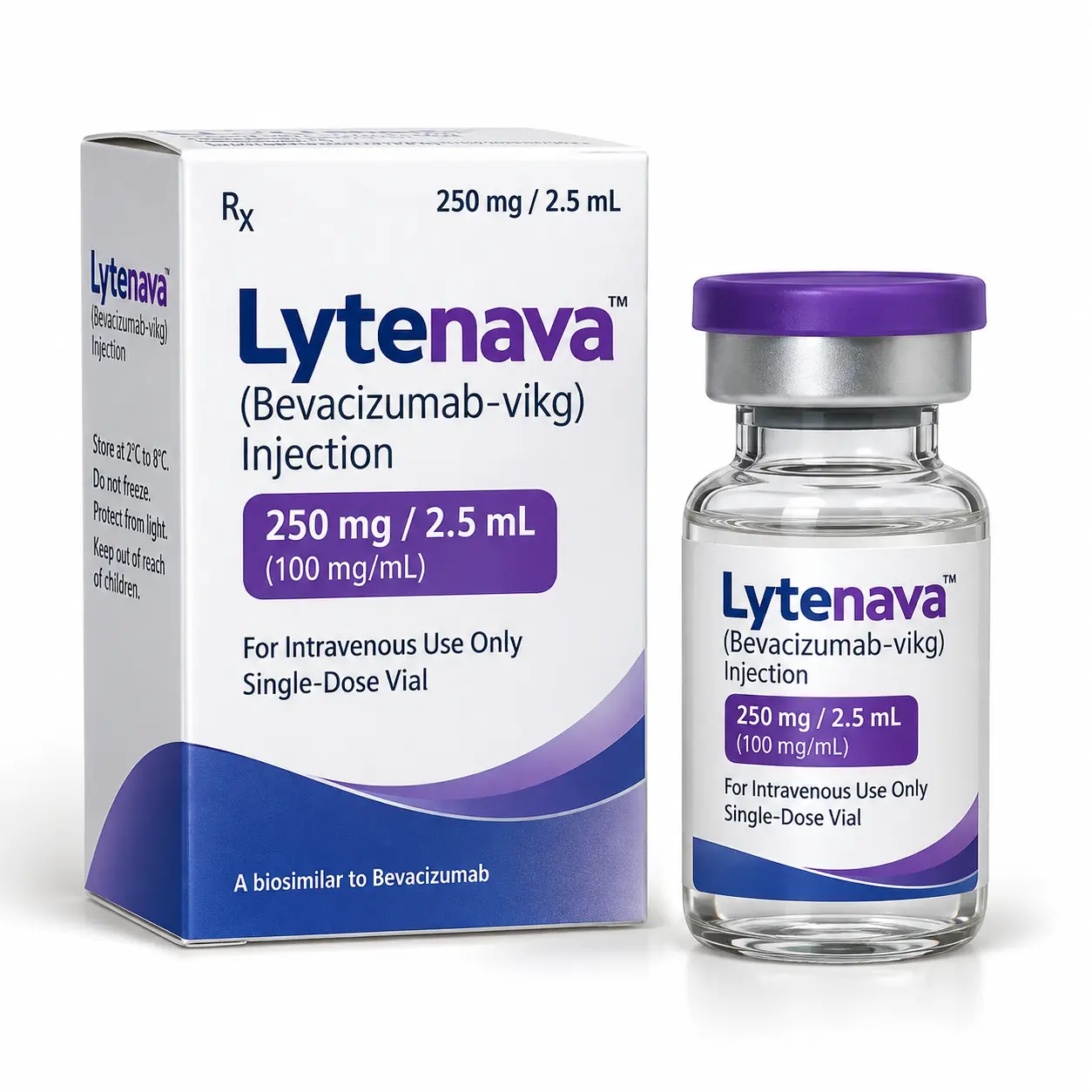
Lytenava (Bevacizumab-vikg Injections)

  • Medicine Name: Lytenava
  • Active Ingredient (API): Bevacizumab-vikg
  • Dosage Form & Strength: Injection: 1.25 mg (0.05 mL of 25 mg/mL) in a single-dose glass vial
  • Developed By: Outlook Therapeutics, Inc.


Medical Uses

Lytenava (bevacizumab-vikg) is a vascular endothelial growth factor (VEGF) inhibitor indicated for the treatment of patients with neovascular (wet) age-related macular degeneration (nAMD).

Wet AMD is a progressive eye condition in which abnormal blood vessels grow beneath the retina and leak fluid or blood, causing rapid and often severe damage to central vision. It is a leading cause of vision loss in older adults and, without timely treatment, can progress to significant and irreversible impairment of the macula, the part of the retina responsible for sharp, central vision.

Lytenava works by binding to VEGF and preventing its interaction with receptors (Flt-1 and KDR) on the surface of endothelial cells. By blocking VEGF-A, bevacizumab-vikg suppresses abnormal endothelial cell proliferation, neovascularization, and vascular permeability, directly targeting the underlying disease process responsible for vision loss in nAMD.

Lytenava is the first and only FDA-approved ophthalmic formulation of bevacizumab, developed and manufactured specifically for intraocular use, supported by its own dedicated clinical, nonclinical, and manufacturing data through a standalone Biologics License Application (BLA). It is intended to offer retina specialists an alternative to repackaged/compounded intravenous bevacizumab formulations that have long been used off-label in retinal disease.

Lytenava is a prescription biological medicine and should only be administered by a qualified ophthalmologist or retina specialist experienced in intravitreal injection procedures.

Recommended Dosage:
The recommended dosage of Lytenava is 1.25 mg (0.05 mL) administered by intravitreal injection into the affected eye once monthly (approximately every 28 days).

Lytenava is supplied in a sterile, preservative-free, single-dose glass vial for single-eye, single-use administration. A trained ophthalmologist must administer it under controlled aseptic conditions in a clinical setting; it is not intended for self-administration.

Patients should adhere to the monthly dosing schedule recommended by their treating physician. Make any change in dosing frequency, discontinue, or switch to an alternative anti-VEGF therapy only in consultation with the treating retina specialist.

Warnings & Precautions

  • Intravitreal injections, including Lytenava, have been associated with endophthalmitis and retinal detachment. Proper aseptic injection technique must always be followed, and patients should be monitored following each injection to permit early detection and treatment should an infection or retinal complication occur.
  • Patients should promptly report any signs of infection or inflammation, such as eye pain, increased redness, sensitivity to light, blurred or decreased vision, or an increase in the number of floaters, to their treating physician immediately following an injection.
  • Intravitreal anti-VEGF therapy, including Lytenava, has been associated with increases in intraocular pressure. Intraocular pressure and the perfusion of the optic nerve head should be monitored and managed appropriately as directed by the treating physician.
  • As with other systemically administered or absorbed anti-VEGF agents, there is a potential risk of arterial thromboembolic events, including stroke and myocardial infarction. Patients with a history of such events should discuss the potential risks and benefits with their treating physician.
  • Lytenava is contraindicated in patients with ocular or periocular infections, active intraocular inflammation, or known hypersensitivity to bevacizumab-vikg or any component of the formulation.
  • There is limited data on the use of Lytenava during pregnancy or breastfeeding. Women who are pregnant, planning pregnancy, or breastfeeding should discuss the potential risks and benefits with their treating physician before starting treatment.
  • Before starting Lytenava, patients should inform their healthcare provider about all other ocular treatments, medicines, and any recent or planned intraocular procedures, to help avoid complications associated with intravitreal therapy.

Documentation & Availability

What documents are required to import LYTENAVA to India?

LYTENAVA (bevacizumab-vikg) may be imported in the patient’s name only, by patients or government hospitals. The following documentation is required:

  • A valid prescription from a qualified ophthalmologist/retina specialist
  • The patient’s diagnostic reports (including retinal imaging/OCT findings, where available)
  • Patient ID proof (issued by the Government of India)
How is the order confirmed?

The order is confirmed only after receipt and verification of a valid prescription from the doctor and an import permit, if applicable.

Is LYTENAVA available in India?

LYTENAVA (bevacizumab-vikg injections) is a prescription medicine that legally requires a doctor’s prescription to be dispensed. As of the current publicly available information, LYTENAVA is not commercially marketed in India.

However, patients in India can legally access Lytenava through the Named Patient Program (NPP) — an import provision that allows a medicine not yet registered in India to be imported in the name of an individual patient, on the prescription of their treating physician.

Indian Pharma Network (IPN) acts as a facilitator under named patient supply, providing input on:
Availability of Lytenava in India (Mumbai, Kolkata, Hyderabad, Chennai, Ahmedabad, Delhi, Bangalore, Pune, etc.) and pathways to access it

  • Availability in Gulf countries (Bahrain, Oman, Qatar, Kuwait, Iraq, Saudi Arabia, and the UAE)
  • Lytenava price in India under the NPP route
  • Sourcing from genuine, reliable channels in the USA, UK, and Europe
  • Ensuring full transparency throughout the process

LYTENAVA can be made available to patients, doctors, and hospitals in Gurgaon, Delhi, Bangalore, Mumbai, Navi Mumbai, Thane, Hyderabad, Mysore, Kerala, Chennai, Coimbatore, Madurai, Kolkata, Ahmedabad, Surat, Vadodara, Pune, Nagpur, Nashik, Jaipur, Udaipur, Lucknow, Kanpur, Gorakhpur, Chandigarh, Mohali, Faridabad, Noida, Ghaziabad, Kochi, Trivandrum, Kozhikode, Thrissur, Kannur, Mangalore, Bhubaneswar, Patna, Ranchi, Raipur, Guwahati, Visakhapatnam, Vijayawada, Goa, Jammu, Srinagar, Dehradun, Bhopal, Indore, Ludhiana, Amritsar, and others — and can facilitate delivery to the patient’s treating hospital or eye centre. Orders are confirmed only after receipt of a valid doctor’s prescription and an import permit, where applicable.

Sourcing & Delivery

Indian Pharma Network (IPN) can source Lytenava from reliable channels across the world and facilitate supply to patients, doctors, and hospitals, offering worldwide access to this treatment under applicable legal provisions. All prescriptions are dispensed and checked by registered pharmacists and dispatched to the patient’s address from New Delhi, India, after legal requirements are fulfilled.

For Lytenava cost in India and availability, contact IPN at WhatsApp: +91 98104 69557 | Toll-Free: 1800-1200-365 or email info@indianpharmanetwork.in.

FAQ

What is the generic name for the brand drug Lytenava?

Bevacizumab-vikg (also known as bevacizumab gamma in the EU) is the generic/scientific name for the brand drug Lytenava.

What is Lytenava used for?

Lytenava (bevacizumab-vikg) is indicated for the treatment of patients with neovascular (wet) age-related macular degeneration (nAMD).

Who develops and manufactures Lytenava?

Lytenava was developed and is manufactured by Outlook Therapeutics, Inc., a biopharmaceutical company focused on ophthalmic and retinal disease treatments, entirely at U.S. cGMP-compliant facilities.

What type of medicine is Lytenava?

Lytenava is a biological medicine that acts as a VEGF (vascular endothelial growth factor) inhibitor. By blocking VEGF-A, it suppresses abnormal blood vessel growth and leakage in the retina associated with wet AMD.

Is Lytenava approved by the FDA?

Yes. Lytenava (bevacizumab-vikg) received FDA approval on July 24, 2026, becoming the first and only FDA-approved ophthalmic bevacizumab formulation for wet AMD in the United States.

Where is Lytenava approved?

As of current publicly available information, Lytenava is approved in the United States by the FDA and has also received Marketing Authorization in the European Union and the United Kingdom. Regulatory submissions or reviews in other countries may still be ongoing.

What strength and dosage form is available?

Lytenava is supplied as a 1.25 mg (0.05 mL) intravitreal injection in a sterile, preservative-free, single-dose glass vial.

What are the most common side effects of Lytenava?

The most commonly reported adverse reaction in clinical trials was conjunctival hemorrhage. Other risks associated with intravitreal injection include endophthalmitis, retinal detachment, and increased intraocular pressure.

How does Lytenava import in India work?

Lytenava import in India is possible through the Named Patient Program (NPP) — on behalf of an individual patient with a valid doctor’s prescription. Indian Pharma Network (IPN) helps manage the process, including documentation, approvals, and delivery, so the medicine reaches the patient safely and legally.

Who is a reliable Lytenava supplier in India?

Indian Pharma Network (IPN) facilitates compliant access to Lytenava in India through global sourcing channels and structured documentation support for eligible patients, in accordance with applicable regulatory provisions.

How much does Lytenava cost in India?

Lytenava is not yet approved or marketed in India, but patients can legally access it through the Named Patient Program. Prices may vary over time due to market and regulatory factors. For the latest Lytenava cost in India, call +91 96548 60915 or WhatsApp +91 98104 69557 or email info@indianpharmanetwork.in.

Can Lytenava be accessed in SAARC countries?

Yes. In addition to Gulf countries, Lytenava can be accessed through import provisions such as the Named Patient Program in SAARC countries (India, Afghanistan, Maldives, Nepal, Bangladesh, Bhutan, Pakistan, and Sri Lanka). IPN can help facilitate compliant supply where permitted by local regulations.

Is it safe to buy Lytenava Injections online in India?

Yes, one can buy Lytenava in India through the Indian Pharma Network (IPN), as this product is not yet registered or available in the country. IPN can help facilitate the import of Lytenava Injections through legal channels.

Can Lytenava be delivered to my treating hospital or eye centre?

Yes. IPN can facilitate delivery of Lytenava to the patient’s treating hospital or eye centre across major Indian cities, under the Named Patient Program, with a valid doctor’s prescription and import permit where applicable. Leading eye hospitals and centres include AIIMS Delhi, Sankara Nethralaya, LV Prasad Eye Institute, Dr. Shroff’s Charity Eye Hospital, Aravind Eye Hospital, Centre for Sight, Sir Ganga Ram Hospital, Medanta – The Medicity, Apollo Hospitals Chennai, Christian Medical College (CMC), PGIMER, Narayana Nethralaya, Fortis Memorial Research Institute, Kokilaben Dhirubhai Ambani Hospital, Manipal Hospitals, Max Healthcare, and Bombay Hospital.

What are the storage conditions for Lytenava Injections?

Lytenava should be stored refrigerated at 2°C to 8°C (36°F to 46°F) in its original carton to protect it from light. Do not freeze. Vials should be brought to room temperature prior to administration and used strictly as directed in the official prescribing information.

Disclaimer: Lytenava (bevacizumab-vikg) is a prescription biological medicine and should only be administered under the supervision of a qualified ophthalmologist or retina specialist via intravitreal injection. Product availability, regulatory approvals, and import requirements vary by country. This medicine is intended for patients with neovascular (wet) age-related macular degeneration (nAMD) who meet the approved indication and eligibility criteria. Information provided on this page is intended for educational purposes only and should not be considered medical advice, a substitute for professional healthcare consultation, or a recommendation to self-medicate. Patients should always consult their treating physician regarding diagnosis, treatment options, and eligibility for access through the Named Patient Program.

Global Approval Status

Lytenava (bevacizumab-vikg) has received regulatory approval for the treatment of patients with neovascular (wet) age-related macular degeneration (nAMD).

  • United States: The U.S. Food and Drug Administration (FDA) approved Lytenava (bevacizumab-vikg) on July 24, 2026, making it the first and only FDA-approved ophthalmic formulation of bevacizumab for the treatment of wet AMD in the United States. The approval was supported by data from the NORSE clinical trial program, including the pivotal NORSE TWO study (ClinicalTrials.gov Identifier: NCT03834753).
  • European Union & United Kingdom: Lytenava (marketed as bevacizumab gamma in the EU) has also received Marketing Authorization from the European Commission and the UK’s MHRA, and Outlook Therapeutics has commenced commercial launch in Germany, Austria, and the UK.
  • Other Countries: As of the current publicly available information, Lytenava has not yet received marketing approval in India. Approval status in other countries may vary as regulatory reviews continue. Patients should consult local regulatory authorities or healthcare providers regarding country-specific availability.

Approval in the U.S. was supported by the NORSE clinical trial program. In NORSE TWO, adults with nAMD (median age 79 years) were randomized to receive bevacizumab-vikg 1.25 mg (n=113) once monthly for one year, or ranibizumab 0.5 mg (n=115) once monthly for three months followed by an as-needed regimen. Lytenava dosed monthly demonstrated meaningfully greater best-corrected visual acuity (BCVA) gains compared with ranibizumab (41.7% vs. 23.1% of patients gained ≥15 letters; p=0.0052), along with a low rate of ocular adverse reactions. The most commonly reported adverse reaction across the clinical program was conjunctival hemorrhage.

Bevacizumab-vikg was discovered and developed by Outlook Therapeutics, Inc., and is manufactured entirely at U.S. cGMP-compliant facilities to support a consistent formulation with every dose.

Note: Approval and marketing status vary by country. As of the current publicly available information, Lytenava is not approved or commercially marketed in India.

Contact Patient Support

If you have any questions or need any help, contact our Patient Support Team. We will get in touch with you within 24 hours from Monday to Friday between 9:00 and 10:00 CET.

Disclaimer

All Trademarks and Brands that appear on the website belong to their respective owners and indianpharmanetwork does not lay any claim on them we only provide Information.

Product Enquiry