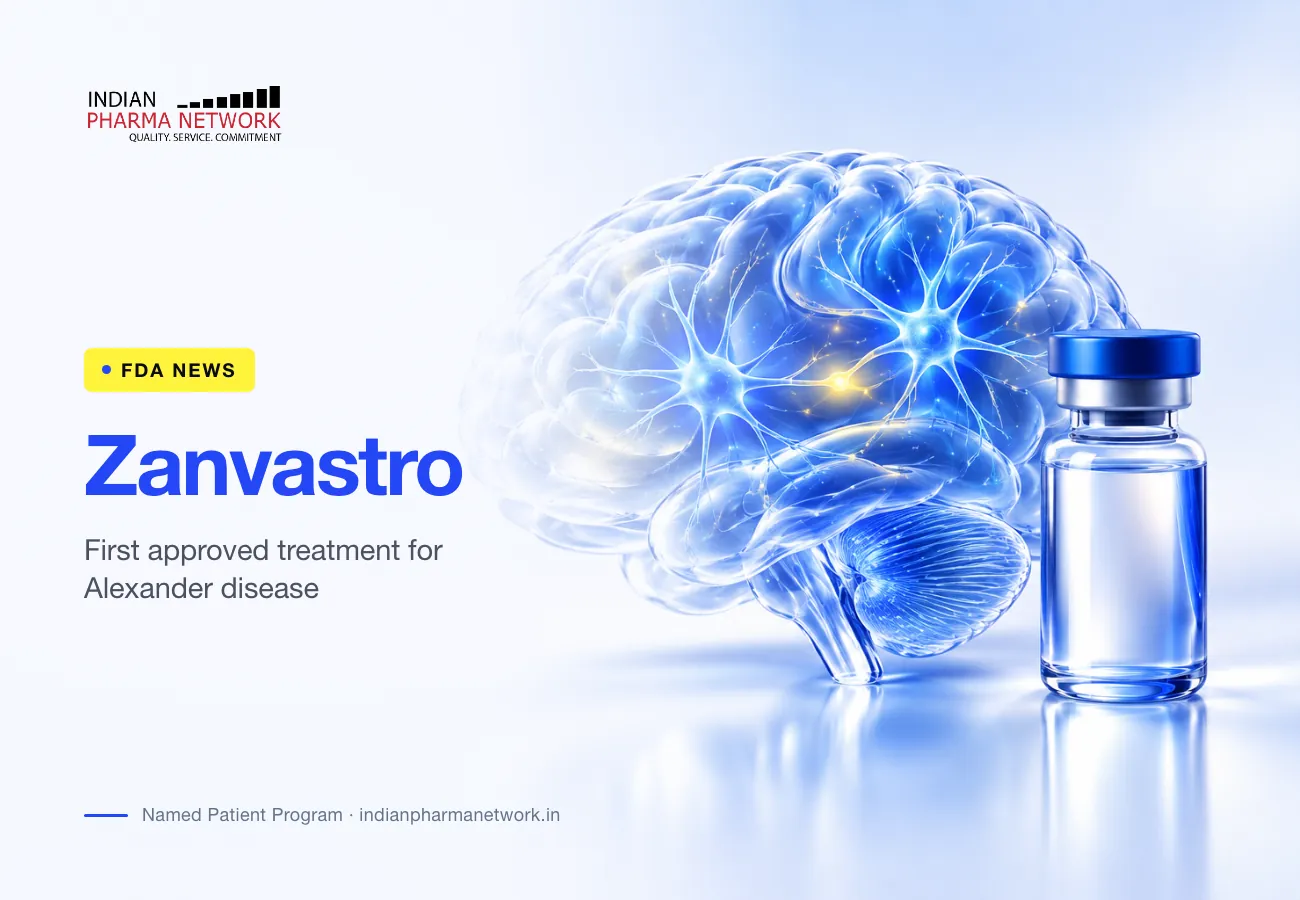
Alexander disease is one of those conditions where, until very recently, doctors could only offer supportive care and watch the disease take its course. That changed on September 3, 2026, when the FDA approved Zanvastro (zilganersen) — the first treatment ever approved for Alexander disease, and the first therapy that actually goes after the root cause instead of just managing symptoms.
What Is Alexander Disease?
Alexander disease is a rare, progressive disorder of the nervous system, caused by a mutation in the gene that makes glial fibrillary acidic protein (GFAP). When GFAP goes wrong, it builds up in the brain’s support cells and slowly damages the nervous system.
It’s an ultra-rare condition — affecting fewer than 1 in a million people — but the impact on the patients and families who deal with it is significant:
- Seizures
- Loss of developmental milestones
- Difficulty walking
- Muscle weakness
- Increased pressure in the brain
How Zanvastro Works
Zanvastro is an antisense oligonucleotide — a lab-designed strand of genetic material that tells the body to make less of the abnormal GFAP protein, before it has a chance to build up and cause more damage. It’s given as an injection into the spinal canal, once every three months, by a trained healthcare professional.
What the Clinical Data Showed
The FDA’s approval was backed by a randomized, controlled trial (NCT04849741) covering 49 patients aged 2 and older, plus a separate open-label group of 4 patients under 2.
Results by Age Group
- Age 5 and up: Among patients who had trouble walking at the start, those on Zanvastro walked significantly faster at 61 weeks than patients who went untreated.
- Ages 2 to 4: Walking speed isn’t a reliable measure at this age, so researchers tracked a broader set of motor skills — standing, walking, running, jumping. Treated children improved on this measure, while the untreated group got worse.
- Under 2: Direct trial data was limited simply because the disease is so rare, but modeling of drug levels and safety data from the youngest patients supported extending the approval down to infancy.
Safety Profile
The most commonly reported side effects in the trial were:
- Vomiting
- Back pain
- Cough
- Headache
- Post-lumbar puncture syndrome
A Warning Worth Knowing
Aseptic meningitis has also been reported in patients on Zanvastro. Anyone on this treatment (or caring for someone who is) should know the symptoms of meningitis and flag them to a doctor immediately if they appear — this is exactly the kind of thing that’s easy to miss if you’re not looking for it.
Who Developed It, and What Fast-Tracked the Approval
Zanvastro comes from Ionis Pharmaceuticals, and it picked up a full set of expedited designations along the way: Orphan Drug, Fast Track, Breakthrough Therapy, Rare Pediatric Disease, and a Priority Review Voucher. That’s about as strong a signal as the FDA gives that a treatment is addressing a genuinely unmet need.
A Bigger Moment for Rare Neurological Disease
Zanvastro’s approval lands in the same window as other major rare-disease and neuromuscular approvals this year — including Isembyld for spinal muscular atrophy, which also targets a mechanism that older drugs didn’t touch. Together, they’re a sign that rare neurological diseases with no real treatment history are finally getting real options.
Frequently Asked Questions
What is Zanvastro (zilganersen) used for?
It treats Alexander disease in children and adults 2 years and older — the first FDA-approved treatment for this disease and the first to target the protein buildup behind it.
How does Zanvastro work and how is it given?
It’s an antisense oligonucleotide that reduces production of the abnormal GFAP protein. It’s given by injection into the spinal canal every three months.
What did the clinical trial show?
Patients 5 and older with walking difficulty showed significantly better walking speed at 61 weeks than untreated patients. Younger children (2–4) improved on a broader motor-skills assessment while the untreated group declined.
What are the safety risks and side effects of Zanvastro?
Common side effects are vomiting, back pain, cough, headache and post-lumbar puncture syndrome. Aseptic meningitis has also been reported — patients and caregivers should watch for meningitis symptoms.
Who approved Zanvastro and what designations did it receive?
The FDA approved it on September 3, 2026, for Ionis Pharmaceuticals. It received Orphan Drug, Fast Track, Breakthrough Therapy, Rare Pediatric Disease and Priority Review Voucher designations.
Getting Access Outside the US
Newly approved rare-disease treatments like Zanvastro often take time to reach patients outside the United States. If you’re a patient or physician looking for guidance on accessing it, Indian Pharma Network works with exactly this kind of case through the Named Patient Program.