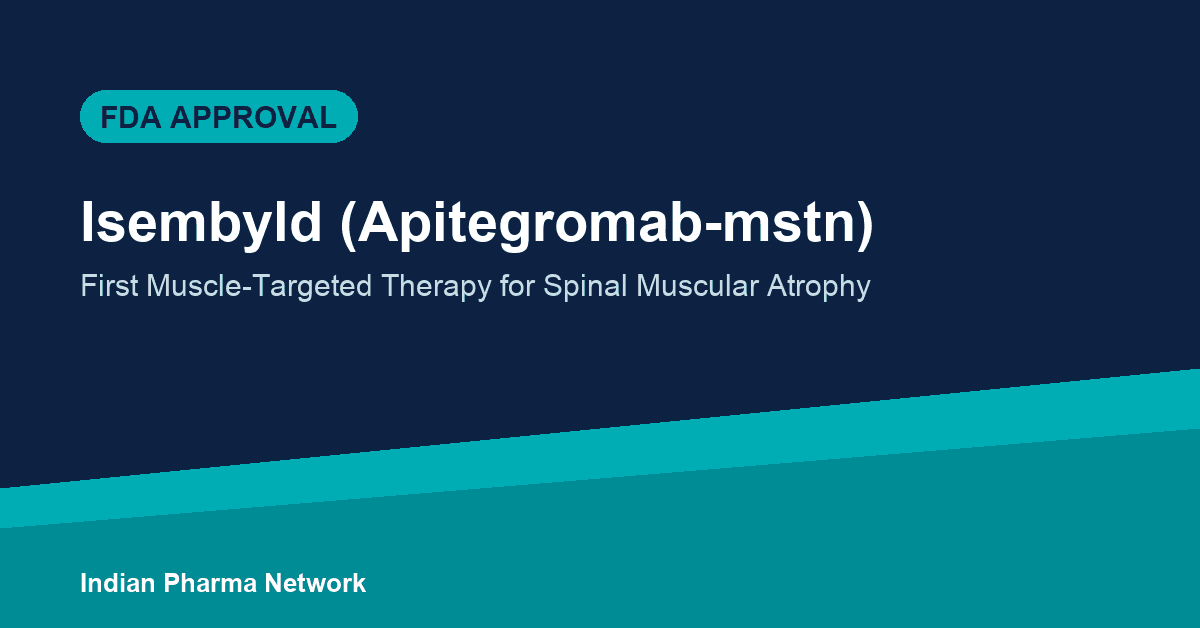
Families living with spinal muscular atrophy (SMA) have watched treatment options improve a lot over the last few years. But even with an SMN2-targeted therapy on board, many patients still struggle with muscle strength and mobility. On September 11, 2026, the FDA gave doctors a new tool for exactly that gap: Isembyld (apitegromab-mstn), the first therapy approved to directly target muscle loss in SMA.
What Isembyld Is Approved For
Isembyld is approved for adults and children aged 2 and older who are already on an SMN2-targeted treatment, such as risdiplam or nusinersen. It isn’t meant to replace that treatment — it’s an add-on, aimed at the muscle side of the disease rather than the underlying genetic defect.
Why This Matters for SMA Patients
SMA happens because a faulty SMN1 gene can’t make enough of a protein that motor neurons need to survive. Existing SMN2-targeted drugs work by coaxing the body’s backup gene to produce more of that protein — and they’ve genuinely changed outcomes for a lot of patients. But here’s the catch:
- Patients with more advanced disease often still can’t walk or move independently, even on treatment.
- Fixing the genetic signal doesn’t automatically rebuild muscle that’s already been lost.
- Until now, there was no approved therapy that addressed muscle loss on its own.
Isembyld is designed to close that gap. It’s a monoclonal antibody that works by blocking myostatin, a protein that normally puts the brakes on muscle growth — so switching it off gives muscle more room to grow and strengthen.
What the Clinical Trial Actually Showed
The approval rests on a 52-week trial (NCT05156320) of 188 patients aged 2 to 21, all of whom were already on an SMN2-targeted treatment and unable to move or walk independently at the start. They were split into three groups — Isembyld 10 mg/kg, Isembyld 20 mg/kg, or placebo — given by IV infusion every four weeks.
The Headline Numbers
- The main analysis looked at 156 patients aged 2 to 12.
- Patients on the 10 mg/kg dose showed a real improvement in motor function at one year (measured on the Hammersmith Functional Motor Scale Expanded), while the placebo group actually got worse.
- 34.2% of treated patients hit a clinically meaningful improvement, compared with just 13.5% on placebo — more than twice the rate.
Safety: What to Watch For
No drug is risk-free, and Isembyld’s label reflects that. The most commonly reported side effects were:
- Upper respiratory tract infections
- Vomiting
- Cough
- Other viral infections
- Headache
- Gastroenteritis
- Sore throat (pharyngitis)
Fracture Risk and Other Warnings
A more serious concern flagged in the trial was an increased risk of fractures, including serious ones, in patients treated with Isembyld. It may also cause fetal harm and affect reproductive function, so this is very much a conversation to have with a specialist before starting treatment — not a decision to make from a blog post.
Who Made It, and What Designations It Received
Isembyld was developed by Scholar Rock, Inc. The FDA granted it Fast Track, Orphan Drug, and Rare Pediatric Disease designations along the way — the kind of regulatory fast-tracking usually reserved for treatments addressing a real, unmet need in a small patient population.
How It Fits Alongside Existing SMA Treatments
If your patient (or your loved one) is already on risdiplam for SMA, Isembyld isn’t a competing option — it’s a potential add-on that targets a different part of the disease. Worth discussing at the next specialist visit, especially if mobility gains have plateaued despite consistent SMN2-targeted therapy.
Frequently Asked Questions
What is Isembyld (apitegromab-mstn) used for?
It treats spinal muscular atrophy in patients 2 years and older who are already receiving an SMN2-targeted treatment — it’s an add-on therapy, not a standalone one.
How is Isembyld different from SMN2-targeted therapies like risdiplam?
SMN2-targeted drugs fix the underlying genetic signal so the body makes more SMN protein. Isembyld works on muscle directly, blocking myostatin so muscle can grow and strengthen — a different mechanism entirely.
What did the clinical trial show?
In a 188-patient, 52-week trial, patients on Isembyld 10 mg/kg improved on a standard motor-function scale, while the placebo group declined. Treated patients were more than twice as likely to see meaningful improvement (34.2% vs. 13.5%).
What are the safety risks and side effects of Isembyld?
Common side effects include respiratory infections, vomiting, cough, headache and sore throat. A more serious risk is increased fracture rate, and the drug may cause fetal harm — full prescribing information should guide any treatment decision.
Who approved Isembyld and when?
The FDA approved it on September 11, 2026, for Scholar Rock, Inc., with Fast Track, Orphan Drug and Rare Pediatric Disease designations.
Sourcing New SMA Therapies Outside the US
For patients and physicians outside the United States, getting timely access to a newly approved rare-disease therapy like Isembyld can be its own hurdle. That’s the kind of access question Indian Pharma Network helps with under the Named Patient Program — feel free to reach out if this is relevant to a patient you’re treating.
Source: U.S. FDA, September 11, 2026